Published October 30, 2026 · Ocean County Tree Service
Why the weeks after Halloween matter
Late October into November is when Ocean County yards change fastest. Leaves drop, the first frosts arrive, and soon after the ground can freeze. The Office of the New Jersey State Climatologist notes the coastal zone has the state's longest freeze-free season (about 217 days along the seacoast) because the ocean stays warm into the fall, so frost tends to come later at the shore than in Pinelands towns like Jackson, Manchester and Plumsted. That gives most of the county a short window where the trees are bare enough to see problems and the ground is still soft enough to rake, grind stumps and run equipment without frozen ruts. This post is about cleanup and small fixes; for a full storm-readiness walk-through, use our nor'easter tree checklist.
Leaves: what New Jersey law says
- No trash. N.J.S.A. 13:1E-99.22 requires every municipality to keep leaves out of the regular garbage and to either collect them separately or require residents to compost or mulch them at home. Landfilling leaves has been banned in New Jersey since the late 1980s.
- No burning. N.J.A.C. 7:27-2.3 says no one may dispose of fallen leaves, or any type of plant, by open burning. That includes brush piles from fall cleanup.
- Follow your town's schedule. Rules differ. Toms River's leaf and brush collection page says Toms River collects leaves twice each fall based on your recycling day, bagged only (no loose leaves), with compostable paper bags recommended. Its fall 2026 curbside branch pickup ran October 12 to 23; after that, brush under 4 inches across, cut to 4 feet or less, goes to the township's Recycling Convenience Center on Church Road. Check your own town's DPW page or app before you rake everything to the curb.
Need a tree looked at or priced? Request a free quote in about a minute.
Get a free quoteKeep leaves and mulch off the trunk
The most common fall mistake we see is raking leaves into a pile around the base of a tree or topping beds with a fresh mound of mulch. Rutgers NJAES fact sheet FS099 explains that mulch piled against a trunk keeps the bark constantly wet, which can kill the inner bark, invite decay, and give mice and voles cover to chew the trunk over winter. Its rule of thumb: keep mulch 8 to 12 inches away from mature trunks (3 to 5 inches for young plants and shrubs) and no more than 3 inches deep in total. The same fact sheet notes that shredded leaves (a pass or two with the mower) make a good mulch, so on many lots you can keep a thin layer instead of bagging it all.
Post-Halloween tree check: 6 small fixes before the freeze
- Take down decorations from limbs. Rope, zip ties, wire and light strands wrapped around branches or trunks can cut into bark as the tree grows. Remove them now rather than leaving them up until spring.
- Pull leaf piles and mulch back from trunks, as above, especially on young trees and shrubs.
- Look up for hangers. Broken limbs caught in the canopy from summer storms are easy to spot once leaves drop. Over a roof, driveway, walkway or the street, they're not a DIY job.
- Check limbs over the roof and gutters. Branches resting on shingles or filling gutters with leaves hold water that can freeze. Light trimming from the ground is fine; anything requiring a ladder and a saw is a pro job.
- Remove old stakes and ties on trees planted a year or more ago. Left too long, ties girdle the trunk.
- Note mower and trimmer wounds at the base of trees. A ring of mulch (kept off the trunk) keeps equipment away next season.
DIY or call a pro?
| Job | Usually DIY? | Why |
|---|---|---|
| Raking, shredding and bagging leaves | Yes | Low risk; follow your town's bag and schedule rules |
| Picking up sticks and small fallen limbs | Yes | Cut to your town's brush size limits for pickup or drop-off |
| Pruning dead twigs you can reach from the ground | Yes | Use a hand pruner or pole saw; make clean cuts outside the branch collar |
| Chainsaw work off a ladder | No | Ladder plus saw is how many homeowner injuries happen |
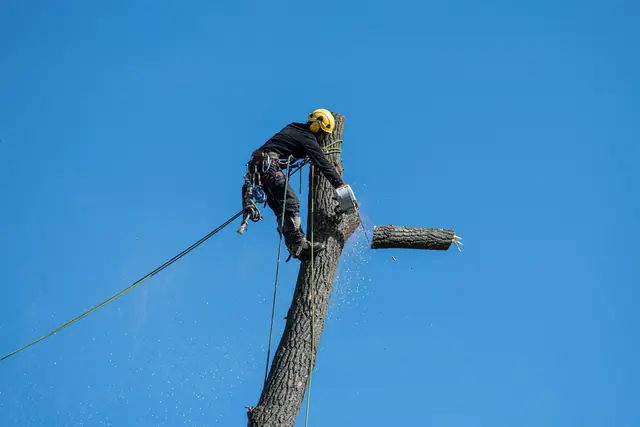
| Broken or hanging limbs over the house, car or street | No | Needs rigging so the limb comes down where it should |
| Anything within reach of a power line | No | Leave wires to JCP&L or a line-clearance crew |
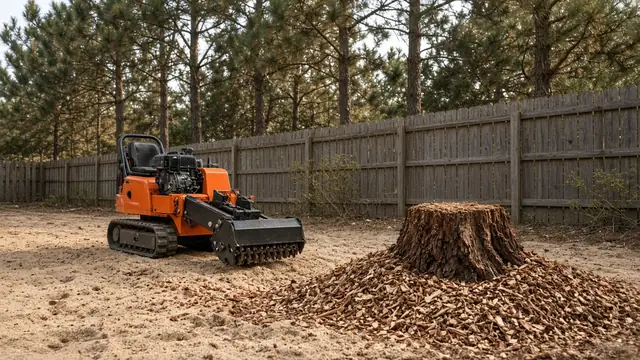
| Stump grinding | No | Rental grinders are dangerous; underground lines need an 811 markout first |
Chainsaws cause far more injuries to homeowners than to professionals. a 2025 study of U.S. emergency-department data in the journal Safety estimated 127,944 people were treated in U.S. emergency departments for non-work chainsaw injuries from 2018 to 2022, about 70 a day, and more than 40% of those injuries were to the legs and feet, a sign that occasional users rarely wear chaps and boots. The same study found most deaths in professional tree work were caused by the tree or limb being cut, not the saw itself. If a cut needs a ladder, a rope or a plan for where the wood will fall, it's worth paying for.
When to call a pro in Ocean County this fall
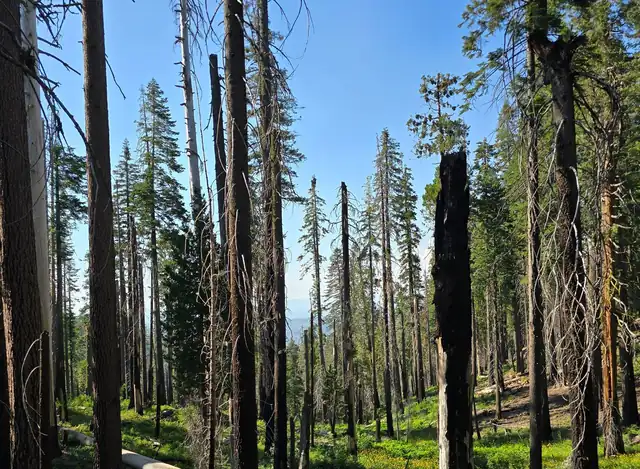
- A dead tree, or a tree with a crack, fungus at the base or a new lean, near the house or road. ISA's Recognizing Tree Risk lists these as key warning signs. See dead tree removal.
- Limbs over the roof that need to come off before winter storms: tree trimming. Oaks are best pruned in the dormant months; see what not to prune in the fall before you cut.
- Old stumps you want gone before the ground freezes: stump grinding (the crew calls NJ One Call (811) for a markout first).
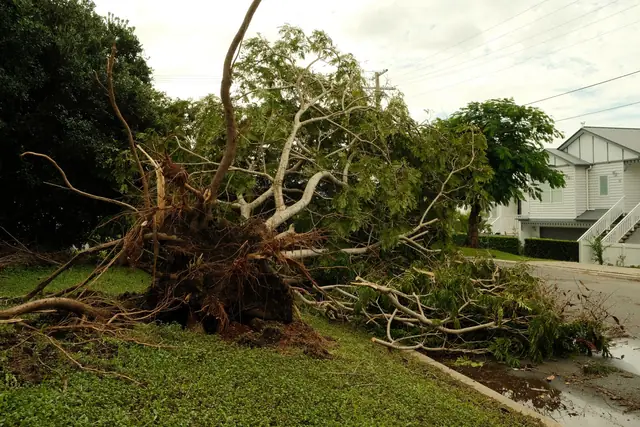
- Leftover storm debris too big to cut safely yourself: storm tree cleanup.
Pruning and cleanup rarely need a permit, but removing a tree often does, including in shore towns like Brick, Point Pleasant and Brielle. Check our town-by-town permit guide. We match you with a licensed, insured local tree pro; ask for the company's NJ Tree Care Operator license number (how to check).
Sources
- N.J.S.A. 13:1E-99.22, municipal leaf collection (via Justia)
- N.J.A.C. 7:27-2.3, open burning of refuse, leaves and plant life (via Cornell LII)
- Toms River's leaf and brush collection page, fall 2026 schedule
- Office of the New Jersey State Climatologist, New Jersey climate overview
- Rutgers NJAES fact sheet FS099, Problems With Over-Mulching Trees and Shrubs
- Michael & Gorucu, Occupational and Nonoccupational Chainsaw Injuries in the United States: 2018–2022, a 2025 study of U.S. emergency-department data in the journal Safety
- ISA's Recognizing Tree Risk (International Society of Arboriculture)
- NJ One Call (811)
More from the blog
- Emerald ash borer
- Nor'easter tree damage
- 24/7 emergency tree removal
- Tree fell on my house (NJ)
- Stump grinding cost by size
- Leaning or split tree after a storm
- Stump sprouts & replanting
- Emergency tree removal: what to expect
- Fall pruning: what not to cut
- Winter burn & salt on evergreens
- Firewood from your trees
- 2026 tree removal prices
- Tree permits by town
- JCP&L and trees near wires
- Pines & oaks that fail in storms
- Insurance and tree removal
- Neighbor's overhanging branches
- Japanese black pine decline
- Storm tree cleanup: who hauls what
- Stump grinding cost in Toms River
- Spongy moth and your oaks
- How to check a tree company's license
- Pinelands tree clearing rules
- Nor'easter tree checklist
- Best time to remove or trim trees
- When a neighbor's tree falls
- All posts
Cost and permit guides
- Tree Removal Cost
- Stump Grinding Cost
- Tree Trimming Cost
- Storm Damage & Insurance
- Tree Permits by Town
- Dead Pine Trees
- Storm-Proofing Trees
- Hazard Tree Assessment
- Dying Ash & Oak Trees
- Crane Removal Cost
Sources are linked in the text and can change. This is general information, not legal, insurance or professional advice. Free referral service, not a tree company. Your request goes to one independent local tree company, which may pay us for the referral.