Why so many towns require permits now
Under New Jersey's stormwater permit program, most municipalities have had to adopt a community-wide tree removal and replacement ordinance. The state's model version (NJDEP model tree removal/replacement ordinance) regulates removal of street trees of 2.5 inches or more in diameter at breast height (DBH) and other trees of 6 inches DBH or more, on public and private property. Removed trees generally have to be replaced, with one to four new trees depending on the size of the tree removed, planted within 12 months, or the owner pays into a town tree fund. Towns can adopt stricter rules, and several in Ocean County have.
What DBH means
Diameter at breast height is the trunk's diameter measured 4.5 feet above the ground. A 6-inch DBH tree has a trunk about 19 inches around at chest height, which is a fairly small tree. In other words, most trees people want removed are covered.
Town-by-town summary
| Town | What needs a permit (summary) | Fee as listed | Source |
|---|---|---|---|
| Toms River | Permit for many removals on private lots | $75; waived for dead, dying or storm-damaged trees | Toms River Township |
| Jackson | Chapter 405; replacement or Tree Escrow may apply | $10 application + $25 inspection | Jackson permit application |
| Lacey | Street trees ≥2.5" DBH; other trees ≥12" DBH | $75 | Ord. 2024-18 |
| Barnegat | Most trees over 5" DBH, plus certain dogwoods and hollies | $100 application + $100 permit | application |
| Stafford | Street trees ≥2.5"; other trees ≥6" DBH | $25 per residential lot | Ch. 194 |
| Little Egg Harbor | Street trees ≥2.5"; other trees ≥6" DBH | $25 per residential lot | Ord. 2025-08 |
| Point Pleasant | Any street tree; other trees ≥6" DBH; replacement required | $150 application | ordinance |
| Beachwood | Street trees ≥2.5"; other trees ≥6" DBH | $10 | borough |
| Ocean Township | Street trees ≥2.5"; other trees ≥6" DBH; 1–4 replacements | See application | Ch. 373 |
Summaries of each town's published ordinance or application as of October 2026. Fees and thresholds change; always confirm with the town before work starts.
Brick, Lakewood and Manchester also have tree rules; see our Brick, Lakewood and Manchester pages. Point Pleasant Beach adopted a detailed tree removal and replacement ordinance in 2024; see the Point Pleasant Beach page.
Common exemptions
Most of these ordinances exempt, or reduce the requirements for, at least some of the following. Many still ask for written notice or documentation:
- Dead, dying or hazard trees, often with a letter or photos from a NJ Licensed Tree Expert
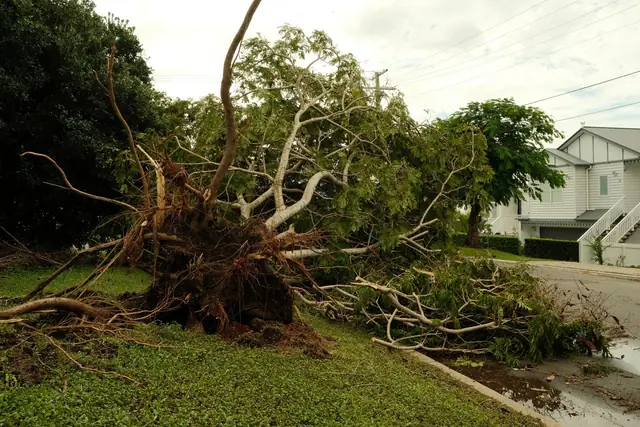
- Trees damaged in a storm
- Commercial farms, nurseries and approved forestry plans
- Work by utilities to keep lines clear
Pinelands properties
Large parts of Ocean County are in the Pinelands Area, including parts of Barnegat, Beachwood, Berkeley, Jackson, Lacey, Lakehurst, Little Egg Harbor, Manchester, Ocean Township, Plumsted, Stafford and Toms River (Pinelands Commission). Single-tree removals on a house lot are usually handled locally, but larger clearing can need Pinelands review. Check with your town's zoning office first.
Who gets the permit?
The property owner is responsible, but many tree companies will fill out and file the application for you. Ask whether that's included in your quote, and don't let work start until the permit is approved. Fines for unpermitted removals can be far more than the permit fee, plus replacement costs. HOA rules apply on top of town rules.
Do I need a permit to remove a dead tree?
Often you still need to notify the town, but many ordinances waive the fee or replacement for dead, dying or hazard trees. Toms River, for example, waives its permit fee for dead or storm-damaged trees.
What is a street tree?
Generally a tree in the public right-of-way, often the strip between the sidewalk and the road. Many towns regulate street trees of 2.5 inches DBH and up, and some don't let homeowners remove them at all.
More guides
Areas we cover
- Toms River
- Brick
- Lakewood
- Jackson
- Manchester
- Berkeley
- Lacey
- Barnegat
- Stafford
- Little Egg Harbor
- Point Pleasant
- Point Pleasant Beach
- Plumsted
- Beachwood
- Ocean Township
Last updated October 18, 2026. Prices and rules come from the cited third-party and municipal sources and can change. They aren't quotes or legal advice. Free referral service, not a tree company. Your request goes to one independent local tree company, which may pay us for the referral.