Two storm seasons, not one
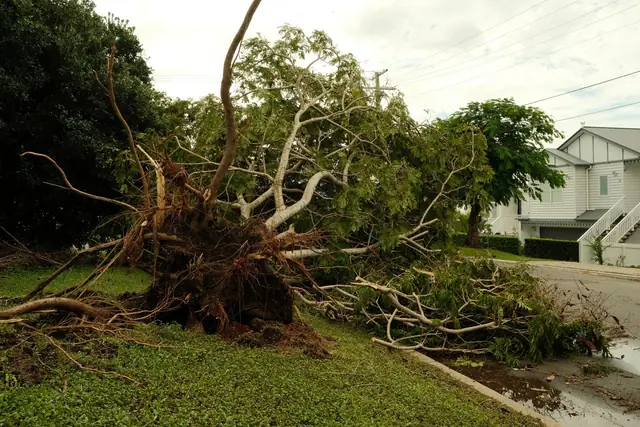
Ocean County gets hit from two directions. Atlantic hurricane season runs from June 1 to November 30 (National Weather Service). Nor'easters can happen any time of year but are most frequent and strongest from September through April (National Weather Service), and they often last longer than a hurricane passing by, with days of wind, rain or heavy wet snow. Sandy came ashore near Brigantine on October 29, 2012, just south of Ocean County (National Hurricane Center report on Sandy); many local homeowners still remember the trees it took down. Between the two seasons, there's no time of year when trees near the house can be ignored.
Trees most likely to fail
The International Society of Arboriculture lists these warning signs of a tree that may fail:
- Dead trees and dead branches. Dead pines are the classic Ocean County storm casualty. See our dead pine guide.
- Cracks in the trunk or major limbs, and weak forks where two trunks of similar size split with bark pinched between them.
- Decay: hollows, soft wood, or mushrooms growing on the trunk or roots.
- A new or worsening lean, especially with soil heaving or cracking on the opposite side.
- Root damage from trenching, new driveways, pools or grade changes.
Trees that tower over the house, the driveway or a neighbor's roof deserve the closest look.
Your storm-prep checklist
- Walk the yard after leaf drop and again in late spring. Look up for hanging or dead limbs, and down at the base for mushrooms, cracks and lifted soil.
- Remove deadwood. Dead branches are what usually come down first in a blow.
- Clear the roof and gutters. Keep limbs well back from the roof, chimney and siding.
- Thin, don't top. Selective thinning lets wind pass through the crown. Topping (cutting the top off) causes weak regrowth that breaks more easily later.
- Ask about cabling or bracing for a valuable tree with a weak fork. A licensed tree expert can tell you whether it's worth it or whether removal is safer.
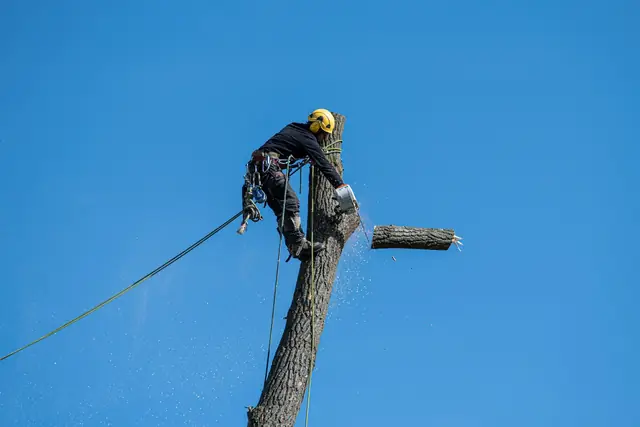
- Deal with dead trees now, while they can still be climbed safely and before a storm drops them for you.
- Leave wires to the pros. Branches on the lines between poles are the utility's job (JCP&L serves most of Ocean County).
Best time to schedule
Late fall through winter is ideal for most pruning: trees are dormant, branch structure is easy to see, and many tree companies are less busy. Spring, before hurricane season, is the next best window. The worst time to call is the day before a named storm, when every crew is booked. If you're thinking about work, ask for quotes early.
Before the storm hits
- Move cars away from large trees if you can.
- Bring in or tie down anything a falling limb could launch.
- Photograph your trees and house so you have "before" pictures for insurance.
After the storm
- Stay away from downed wires and call 911 for any danger.
- Don't cut trees under tension, and don't climb onto the roof.
- Read what to do after a tree falls and what insurance usually covers, and request storm tree service when it's safe.
Hire carefully
After big storms, out-of-town and unlicensed crews go door to door. Ask for the company's NJ Licensed Tree Care Operator number (NJ Board of Tree Experts) and a certificate of insurance, get the price in writing, and avoid large cash deposits.
Should I cut down big trees near my house before hurricane season?
Not automatically. A healthy, well-structured tree often handles wind better than people expect. Remove dead, decayed or seriously defective trees, and have a licensed tree expert assess the rest.
How much should be pruned at once?
Most arborists avoid removing more than about a quarter of a tree's live crown in one season. Over-thinning can actually make a tree more vulnerable to wind.
When is nor'easter season in New Jersey?
Nor'easters can happen any time but are most frequent and strongest from September through April, according to the National Weather Service.
More guides
- Tree Removal Cost
- Stump Grinding Cost
- Tree Trimming Cost
- Storm Damage & Insurance
- Tree Permits by Town
- Dead Pine Trees
Areas we cover
- Toms River
- Brick
- Lakewood
- Jackson
- Manchester
- Berkeley
- Lacey
- Barnegat
- Stafford
- Little Egg Harbor
- Point Pleasant
- Point Pleasant Beach
- Plumsted
- Beachwood
- Ocean Township
- Island Heights
- Lakehurst
- Pine Beach
- Tuckerton
Last updated October 18, 2026. Prices and rules come from the cited third-party and municipal sources and can change. They aren't quotes or legal advice. Free referral service, not a tree company. Your request goes to one independent local tree company, which may pay us for the referral.