Published October 19, 2026 · Ocean County Tree Service
Will my stump sprout? Common Ocean County trees
| Tree | Sprouts after cutting? | Notes |
|---|---|---|
| Red maple | Yes, often heavily | Very common here; expect sprouts if the stump is left |
| Oaks (red, black, white, chestnut) | Yes, especially younger trees | Shoots ring the stump |
| Black cherry, sweetgum | Yes | Sweetgum can sucker from roots |
| Pitch pine | Sometimes, mostly young trees | Unusual for a pine |
| Most other pines, cedars, arborvitae | Rarely | Stump usually just dies |
| Tree-of-heaven, black locust | Yes, aggressively, from roots | Cut-stump treatment often isn't enough |
General species behavior from K-State Research and Extension, Iowa State University Extension and Penn State Extension. Individual trees vary.
Three ways to stop regrowth
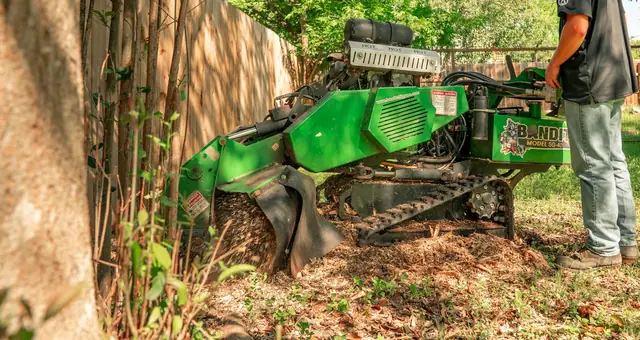
- Grind it out. Grinding about 6–12 inches below grade removes most of the sprouting tissue. Have the lines marked first through NJ One Call (811). Prices are in our stump grinding cost guide and the Toms River stump grinding post.
- Cut and wait. Clip sprouts at ground level every time they show. The roots eventually run out of stored energy. Depending on the tree, that's a few cuttings or a couple of years (K-State Research and Extension).
- Cut-stump treatment. Extension services describe treating a fresh cut right away (within minutes) with a glyphosate or triclopyr product labeled for cut stumps, applied to the living ring just inside the bark (K-State Research and Extension; Iowa State University Extension). Don't use it on sprouts connected to a tree you want to keep, since shared roots can carry it to that tree. Avoid long-lasting soil-active products near gardens (Iowa State University Extension).
Need a tree looked at or priced? Request a free quote in about a minute.
Get a free quoteSinking spots and mushrooms
After grinding, the old root mass rots for years. Expect the spot to settle; top it with soil and reseed once or twice. Mushrooms on the old root area are a sign of normal decay and don't harm nearby healthy trees.
Replanting where a tree came out
- Rake out the grindings. Fresh wood chips mixed into the soil tie up nitrogen, so they're better used as mulch elsewhere.
- Fill with screened topsoil and let it settle a few weeks.
- Plant a few feet to the side of the old stump if you can.
- Pick for the site. Near the shore, cedar and holly handle salt (salt and winter burn guide). Keep big species away from wires and the house.
- Some towns require replacement trees when one is removed. Check the permit guide or your town page, such as Lacey or Stafford.
Ready to grind out the stump for good? See stump grinding.
FAQ
Will a tree grow back from a ground stump?
Some species can. Maples, oaks, cherries, sweetgum and many shrubs send up sprouts from the stump or roots. Most pines don't regrow once cut, though young pitch pine is a known exception. Grinding 6 to 12 inches below grade removes most of the stump tissue that sprouts.
How do I stop suckers after a tree is removed?
Either keep cutting sprouts at ground level until the roots run out of stored energy, which can take a few cuttings or a couple of years, or treat a freshly cut stump right away with a herbicide labeled for cut-stump use. Follow the label exactly.
Can I plant a new tree where the stump was ground?
Yes, but not in the same hole right away. Rake out the grindings, which are mostly wood chips, and fill with topsoil. Many people plant a few feet off to the side so the new roots aren't fighting old ones.
Why is my lawn sinking where the stump used to be?
The ground roots and leftover wood rot over the next few years and the soil settles. Top it up with soil a couple of times and reseed.
More from the blog
- Leaning or split tree after a storm
- Emergency tree removal: what to expect
- Fall pruning: what not to cut
- Winter burn & salt on evergreens
- Firewood from your trees
- 2026 tree removal prices
- Tree permits by town
- JCP&L and trees near wires
- Pines & oaks that fail in storms
- Insurance and tree removal
- Neighbor's overhanging branches
- Nor'easter tree checklist
- Best time to remove or trim trees
- When a neighbor's tree falls
- Spongy moth and your oaks
- How to check a tree company's license
- Pinelands tree clearing rules
- Storm tree cleanup: who hauls what
- Stump grinding cost in Toms River
- Japanese black pine decline
- All posts
Cost and permit guides
- Tree Removal Cost
- Stump Grinding Cost
- Tree Trimming Cost
- Storm Damage & Insurance
- Tree Permits by Town
- Dead Pine Trees
- Storm-Proofing Trees
- Hazard Tree Assessment
- Dying Ash & Oak Trees
- Crane Removal Cost
Sources are linked in the text and can change. This is general information, not legal, insurance or professional advice. Free referral service, not a tree company. Your request goes to one independent local tree company, which may pay us for the referral.