When a crane is the right tool
Most trees can be climbed and taken down in roped sections. A crane comes in when that would be slow, risky or impossible:
- A big tree over the house, with no room to lower pieces without hitting the roof.
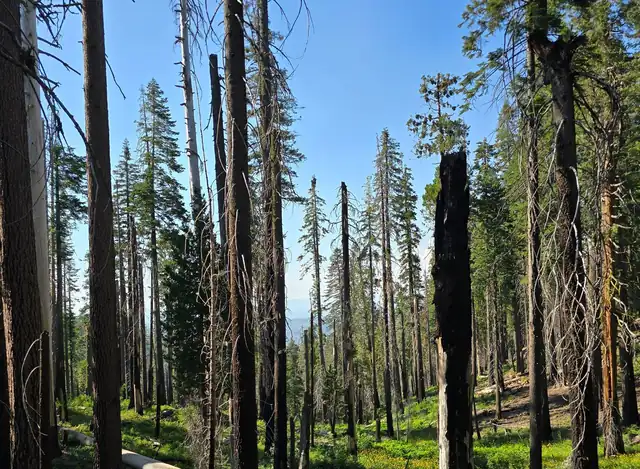
- Dead or decayed trees, especially dead pines, that are no longer safe for a climber to tie into.
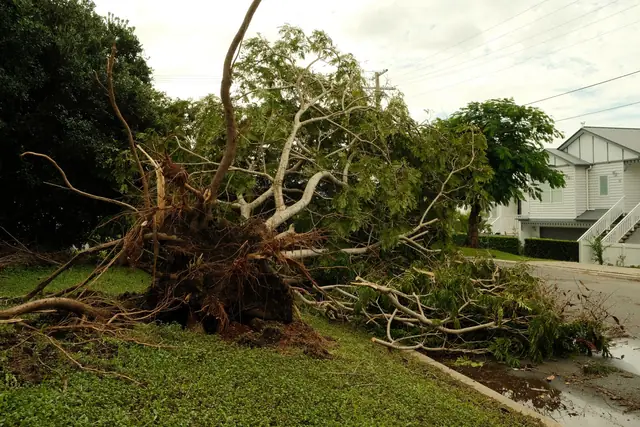
- Storm-damaged trees resting on a structure or hung up in other trees.
- Tight lots, like lagoon homes in Brick, Lacey, Stafford and Little Egg Harbor, or older blocks in Point Pleasant, where trees stand between houses, bulkheads and pools.
- Backyard trees with no equipment access, where the crane lifts wood over the house to the street.
How a crane removal works
- Site visit. The company checks the tree, where the crane can set up (driveway or street), overhead wires, and the ground the crane will sit on.
- Set-up. The crane is placed on outriggers, often on pads or mats to protect the driveway.
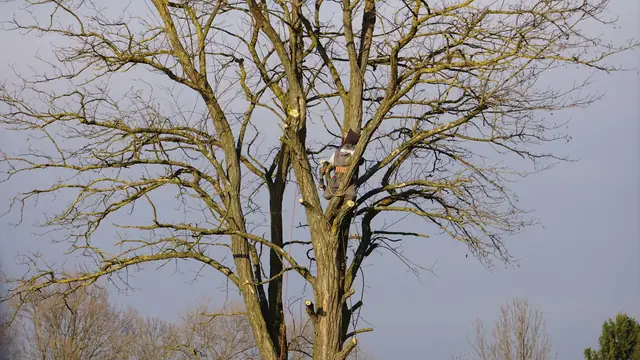
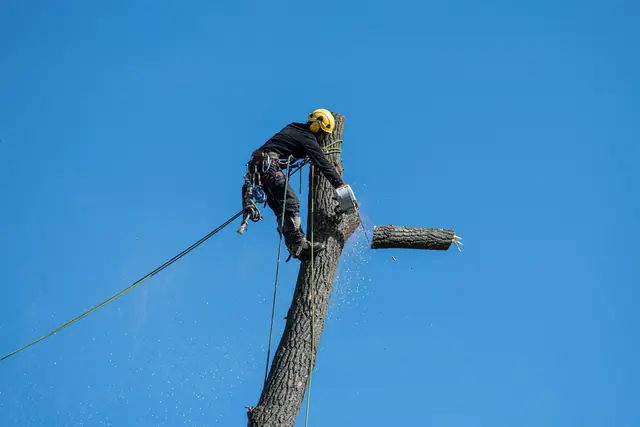
- Pick by pick. A climber or bucket operator attaches the crane to a section, cuts it free, and the crane lifts it away and sets it down where the ground crew cuts and chips it.
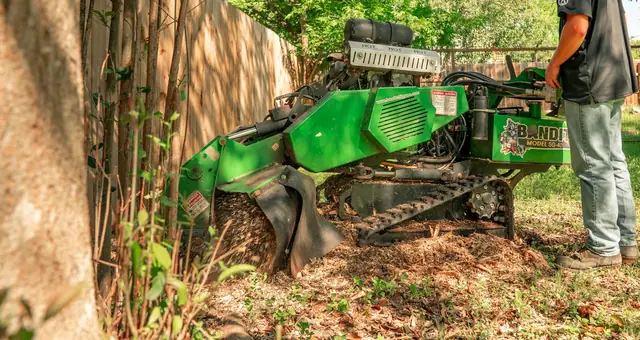
- Cleanup. Wood is chipped or hauled, and the stump can be ground the same day or later.
A crane job can be faster than climbing the whole tree, which is part of why it can make sense even with the cost of the crane.
What affects the price
We don't know of a reliable published price range for crane removals in Ocean County, and they vary a lot, so we won't guess. The main drivers are the size and condition of the tree, how far the crane has to reach, whether it can set up in the driveway or needs the street, wires nearby, the number of picks, and cleanup. Crane work usually costs more than a climbed removal of the same tree, but less than repairing a roof after an uncontrolled one. For general ranges, see our tree removal cost guide.
Wires and safety rules
Federal safety rules require cranes to stay a minimum distance from energized power lines: 10 feet for lines up to 50 kV, and more for higher voltages, unless the utility de-energizes or otherwise protects them (OSHA 29 CFR 1926.1408). That's one reason crane jobs near lines take extra planning, and sometimes coordination with the utility. Ask the company who its crane operator is and whether the operator is certified, and as always ask for its NJ Licensed Tree Care Operator number (NJ Board of Tree Experts) and certificate of insurance.
Permits
- Tree permit: most Ocean County towns regulate tree removal on private lots. See the town-by-town permit guide.
- Street use: if the crane sets up in the road, your town may require a road-use or street-closure permit or police coordination. The tree company usually handles this; ask who will.
- HOA: some associations require approval and set work hours.
What to send with your request
Photos of the whole tree and of the path from the street to the tree, the distance to the house, whether there are wires overhead, and the width of your driveway help a company decide quickly whether it needs a crane. Not sure? Just describe the tree. The company will tell you whether a crane is needed.
Frequently asked questions
When do you need a crane to remove a tree?
When a large tree is over a house or other structure, too decayed to climb safely, storm-damaged and resting on something, or in a spot where pieces can't be lowered to the ground. The tree company decides after seeing the job.
Is crane tree removal more expensive?
Usually more than climbing and roping the same tree, because of the crane and operator, but the job can go faster. Prices vary widely, so get a quote for your tree.
Will a crane damage my driveway or lawn?
Crews usually set the crane's outriggers on pads or mats to spread the weight. Ask how they'll protect your driveway and lawn when you get the quote.
Related pages
- Tree Removal across Ocean County
- Tree Removal in Lacey Township, NJ
- Tree Removal in Stafford Township, NJ
- Tree Removal in Barnegat Township, NJ
- Tree Removal in Point Pleasant, NJ
- Tree Removal in Little Egg Harbor, NJ
- Tree Removal in Berkeley Township, NJ
Cost and permit guides
- Tree Removal Cost
- Stump Grinding Cost
- Tree Trimming Cost
- Storm Damage & Insurance
- Tree Permits by Town
- Dead Pine Trees
- Storm-Proofing Trees
- Hazard Tree Assessment
- Dying Ash & Oak Trees
Last updated October 18, 2026. Prices and rules come from the cited sources and can change. They aren't quotes or legal advice. Free referral service, not a tree company. Your request goes to one independent local tree company, which may pay us for the referral.