Why so many pines die here
Pitch pine is the main tree of the New Jersey Pinelands, and it fills yards from Jackson and Manchester to Barnegat and Little Egg Harbor. It's tough, but on sandy, fast-draining soil it's easily stressed, and stressed pines attract insects. The most damaging is the southern pine beetle. According to the NJDEP, it affected a record 14,100 acres of New Jersey pine forest in 2010 and about 26,000 acres between 2001 and 2010. The beetle prefers pitch pine but attacks most pines.
Other common causes of dead pines on house lots:
- Drought. A dry summer on sandy soil weakens shallow-rooted pines and makes them easy targets for beetles.
- Construction damage. Trenching, new driveways, pools and soil piled over roots often kill a pine one to three years later.
- Other bark beetles (such as Ips engraver beetles and turpentine beetles) that move into weakened trees.
- Lightning and storm damage, which open the tree to insects and decay.
Warning signs to look for
The NJ Audubon southern pine beetle fact sheet and NJDEP describe these signs of a beetle attack:
- Needles changing color fast, from green to yellow to reddish brown. NJDEP says this can happen in as little as two weeks after an attack.
- Pitch tubes: small, popcorn-sized blobs of yellow-white sap on the bark where beetles bored in.
- Fine reddish sawdust in bark crevices or at the base of the tree.
- Small exit holes in the bark, and, under loose bark, winding S-shaped tunnels (the most telling sign of southern pine beetle).
- Neighboring pines starting to brown, since beetles spread from tree to tree.
Other beetles cause some of the same signs, so have a NJ Licensed Tree Expert or a forester take a look before you decide anything.
Why a dead pine shouldn't wait
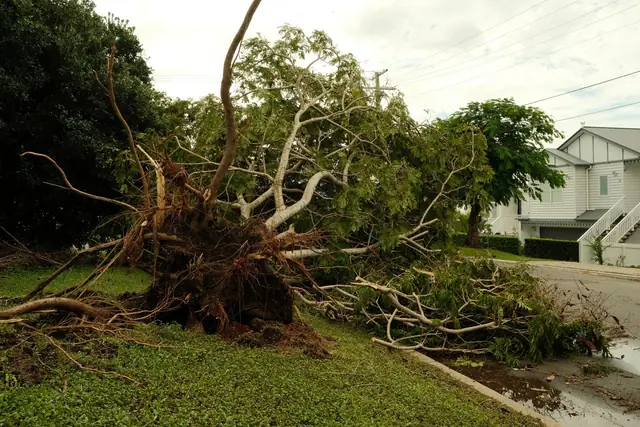
- Dead pines get brittle quickly. Within a season or two, the wood dries and limbs and tops snap off without warning, especially in nor'easter winds.
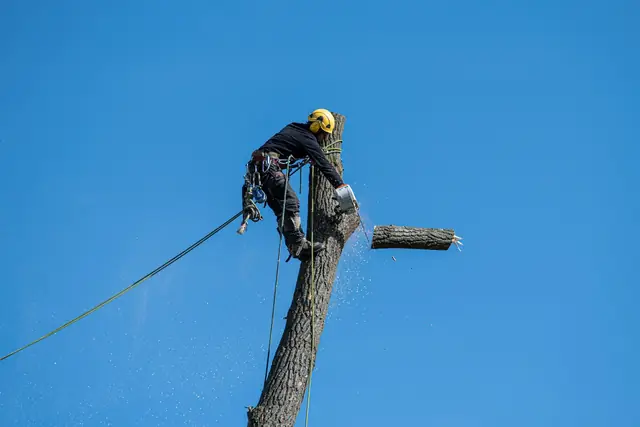
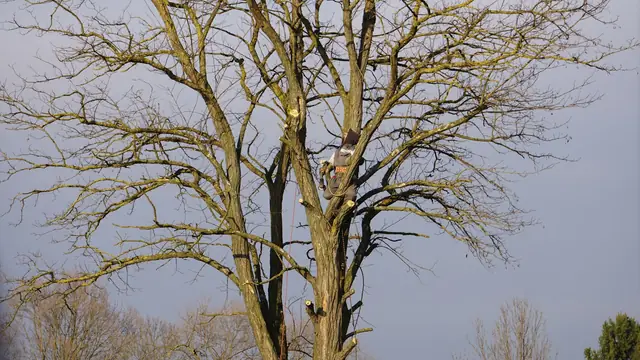
- They get harder and more expensive to remove. A crew may not be able to climb a badly decayed pine safely and may need a bucket truck or crane.
- Beetles can move to your other pines. A tree with active beetles can be a source for nearby trees.
What to do with an infested or dead pine
- Get it looked at and, if it's dead or actively infested, removed promptly.
- Ask the crew to chip the wood or haul it away, not leave it stacked as firewood beside healthy pines. New Jersey forest-health guidance, such as this Weymouth Township fact sheet, recommends chipping infested trees and not moving the wood.
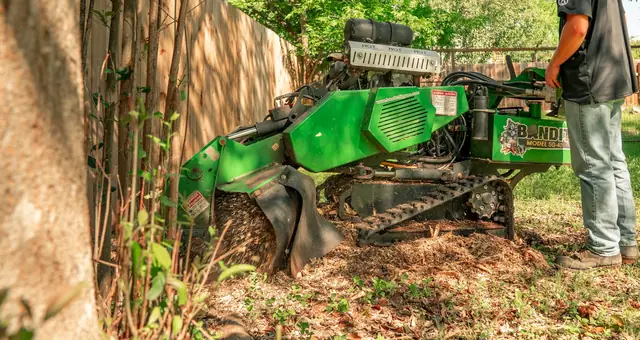
- Have the stump ground; see our stump grinding cost guide.
- Keep your remaining pines healthy: water during long droughts, protect the root zone from vehicles and construction, and keep mulch thin and away from the trunk.
- If you own five or more acres of woods, NJDEP says the NJ Forest Service or a consulting forester can help with a management plan, and some enrolled landowners may qualify for control assistance (NJDEP).
Permits for dead trees
Most Ocean County towns now regulate tree removal, but many waive fees or replacement for dead, dying or hazard trees. Toms River, for example, waives its permit fee for dead, dying or storm-damaged trees (Toms River Township), and Lakehurst and Tuckerton exempt nuisance and hazard trees with documentation. Take dated photos and keep any arborist's note. See the town-by-town permit guide. Large clearing in the Pinelands Area can need extra review (Pinelands Commission).
What it costs
A dead pine costs about the same to remove as a healthy one of the same size, unless it has decayed so far that it can't be climbed. Then a lift or crane adds to the price. See our tree removal cost guide for local price ranges, and ask for quotes before the tree gets worse.
Can a browning pine be saved?
If most of the crown has turned yellow or brown and there are signs of bark beetles, the tree usually can't be saved. A pine with only a few brown branches may be fine. Have a licensed tree expert look at it.
Do I need a permit to remove a dead pine?
Often you still need to notify the town, but many Ocean County ordinances waive the fee or replacement for dead or hazard trees. Check your town's rules first.
Is it safe to keep the wood for firewood?
If beetles were present, it's better to chip it or have it hauled away than to stack it near healthy pines.
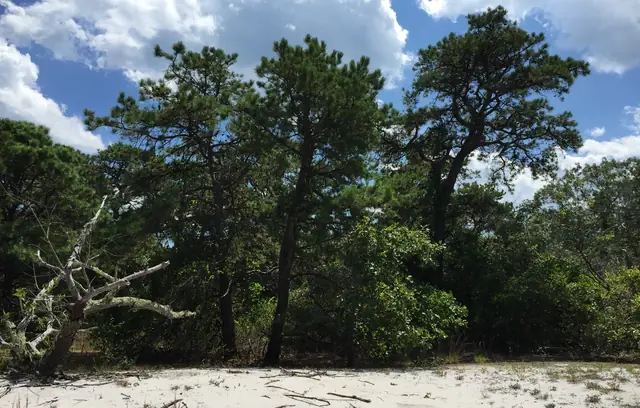
Photo: pitch pines on the Reed's Road Maritime Forest Trail, Island Beach State Park, by Famartin (source), CC BY-SA 4.0, cropped and resized.
More guides
- Tree Removal Cost
- Stump Grinding Cost
- Tree Trimming Cost
- Storm Damage & Insurance
- Tree Permits by Town
- Storm-Proofing Trees
Areas we cover
- Toms River
- Brick
- Lakewood
- Jackson
- Manchester
- Berkeley
- Lacey
- Barnegat
- Stafford
- Little Egg Harbor
- Point Pleasant
- Point Pleasant Beach
- Plumsted
- Beachwood
- Ocean Township
- Island Heights
- Lakehurst
- Pine Beach
- Tuckerton
Last updated October 18, 2026. Prices and rules come from the cited third-party and municipal sources and can change. They aren't quotes or legal advice. Free referral service, not a tree company. Your request goes to one independent local tree company, which may pay us for the referral.