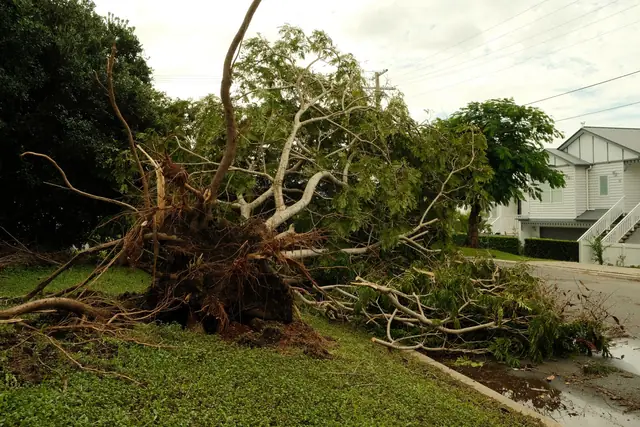
Why Toms River sees so many storm trees
Toms River runs from the barrier-island neighborhoods of Ortley Beach and the Barnegat Bay shoreline to wooded inland sections like Silverton, North Dover and Holiday City. Mature oaks and tall pitch pines stand close to houses on many of those lots, and the township takes wind from two directions: tropical systems in late summer and fall, and nor'easters, which the National Weather Service says are most frequent from September through April. Sandy made landfall just south of Ocean County on October 29, 2012 (National Hurricane Center report on Sandy), and many Toms River homeowners still remember the trees it took down.
Your first hour, step by step
- Get everyone clear of the tree and out of any room it has damaged. A tree that is hung up or resting on a roof can shift without warning.
- Don't cut anything under tension. Trunks and limbs pinned under weight can spring back violently when cut. Leave that to a crew with the right rigging.
- Photograph everything from a safe distance: the tree, where it fell from, the damage, and any wires. Insurers usually want "before cleanup" pictures.
- Stop further damage if it's safe. A tarp over a broken window from inside, or moving a car out from under a cracked limb, is fine. Climbing onto the roof is not.
- Send us the details and photos with the form on this page. Mark it as an emergency so it's flagged as urgent when it reaches the local company.
Toms River tree permits after a storm
Toms River Township requires a permit for many tree removals on private lots, with a listed fee of $75. The fee is waived for removing a dead tree (Toms River Township). In a true emergency, the priority is making the property safe, but keep your photos and ask the tree company how it handles the township paperwork afterward.
What emergency removal usually involves
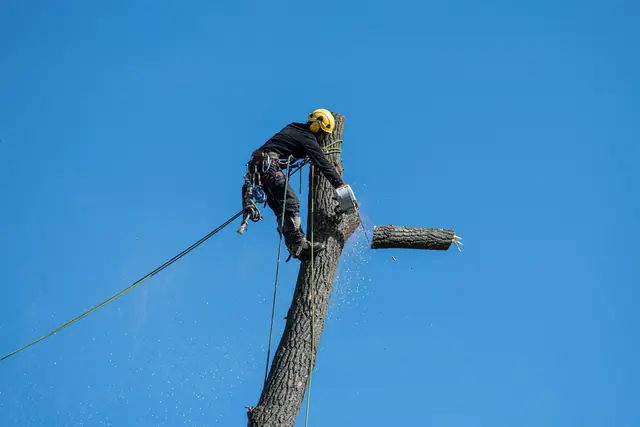
- Making it safe: cutting the tree off the structure in controlled pieces, often with ropes, a bucket truck or a crane. See our crane tree removal page for when a crane is needed.
- Clearing access: opening a blocked driveway or walkway first so you can get in and out.
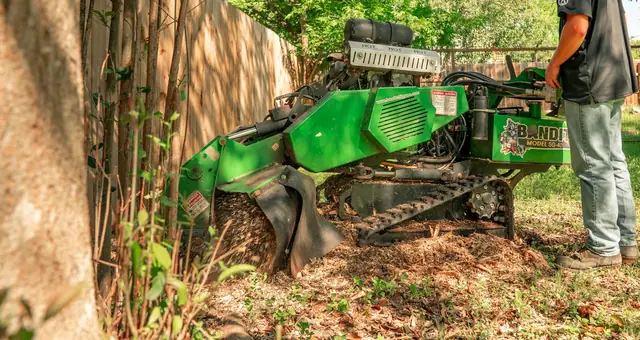
- Cleanup and stump: hauling or chipping the wood, and grinding the stump later if you want it gone.
Emergency and after-hours work often costs more than scheduled work. For context, published estimates for routine Toms River removals run roughly $500 to $2,300, averaging about $1,400 ({HB}). Your actual quote comes from the company that sees the job.
Insurance and storm-chasers
Homeowners' policies often cover removal when a fallen tree damages a covered structure, but rarely when a tree falls without hitting anything. Read our storm damage and insurance guide before you file. After big storms, out-of-town crews knock on doors. Ask any company for its NJ Licensed Tree Care Operator number (NJ Board of Tree Experts) and certificate of insurance, get the price in writing, and avoid paying large cash deposits up front.
After the emergency
Once the house is safe, it's worth having the rest of the yard looked at. A storm that drops one tree often loosens or cracks others, and roots can be damaged on trees that look fine. Look for new leans, cracked soil at the base, and hanging limbs in the days after. Our storm-proofing guide covers the warning signs, and the Toms River page has local permit and cost details.
Frequently asked questions
Can I get emergency tree removal in Toms River at night or on a weekend?
Many tree companies take emergency calls outside normal hours, but availability after a big storm can be limited. Send your request with photos and mark it as an emergency so it's flagged as urgent. We can't guarantee a response time.
Do I need a Toms River permit to remove a storm-damaged tree?
The township says a permit is required before removing any standing tree, alive or dead, though the $75 fee is waived for a dead tree. Keep photos and confirm how emergency removals are handled with the township or your tree company.
Who removes a tree that's on a power line?
The electric utility. Stay away from the line, call 911 if there's danger, and report it to the utility. A tree company can remove the rest of the tree once the line is safe.
Related pages
- All tree services in Toms River
- Emergency & Storm Tree Removal across Ocean County
- Storm Damage Tree Cleanup in Lakewood, NJ
- Stump Grinding in Brick, NJ
- Tree Trimming & Pruning in Jackson, NJ
- Pine Tree Removal in Manchester, NJ
- Crane Tree Removal in Ocean County, NJ
- Tree Removal in Lacey Township, NJ
Cost and permit guides
- Tree Removal Cost
- Stump Grinding Cost
- Tree Trimming Cost
- Storm Damage & Insurance
- Tree Permits by Town
- Dead Pine Trees
- Storm-Proofing Trees
- Hazard Tree Assessment
- Dying Ash & Oak Trees
Last updated October 18, 2026. Prices and rules come from the cited sources and can change. They aren't quotes or legal advice. Free referral service, not a tree company. Your request goes to one independent local tree company, which may pay us for the referral.